


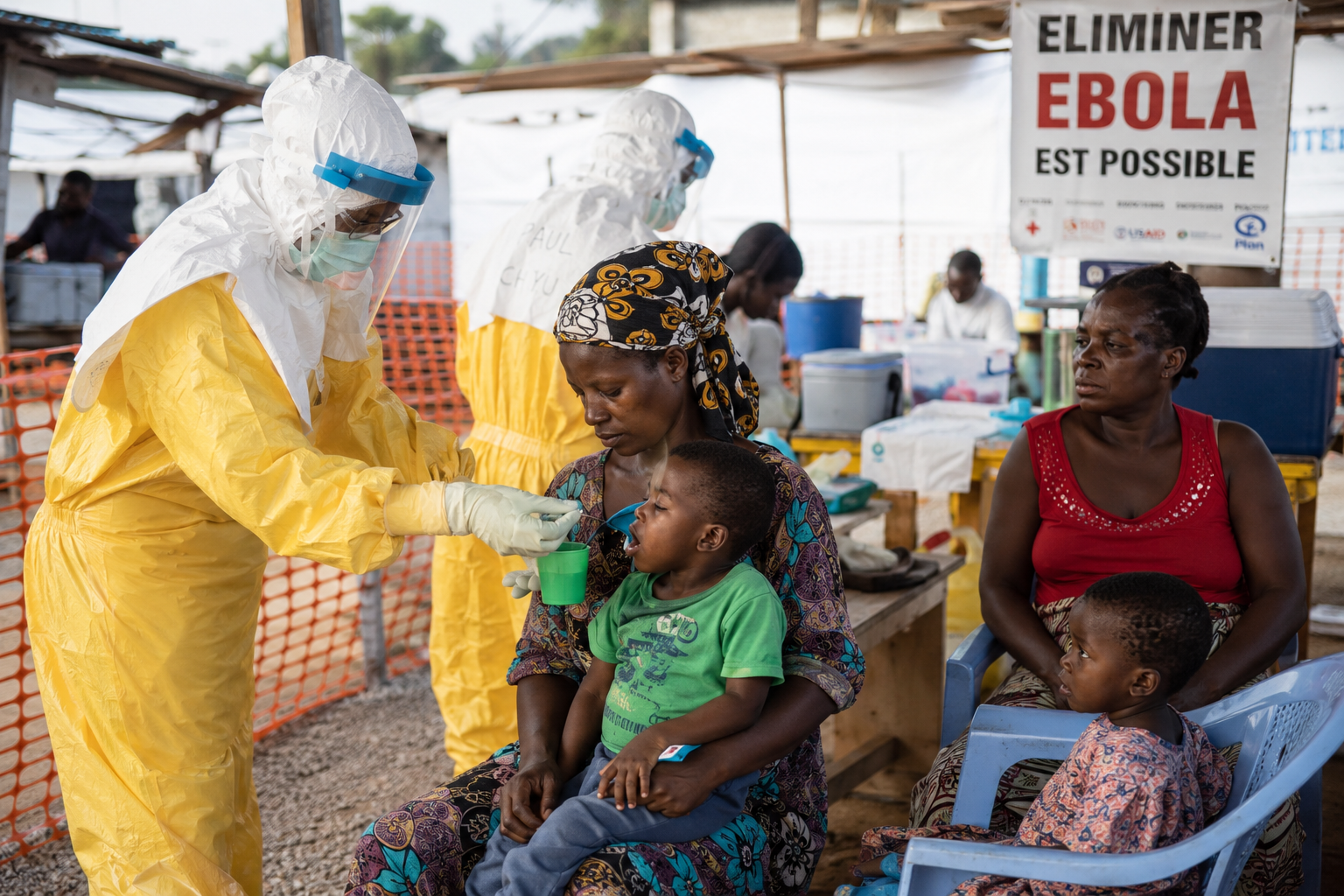
Ebola Outbreak Spreading Rapidly as UK Scientists Race to Develop Vaccine
The Ebola outbreak in the Democratic Republic of Congo (DRC) is “spreading rapidly,” according to the Director-General of the World Health Organisation (WHO), as scientists in the United Kingdom work on a potential vaccine that may still be months away from deployment.
WHO chief Tedros Adhanom Ghebreyesus said there are currently at least 750 suspected Ebola cases in the DRC, alongside 177 suspected deaths.
Of those, 72 cases and seven deaths have so far been officially confirmed, although health officials believe the actual numbers could be significantly higher.
“These figures continue to evolve as surveillance and laboratory testing improve,” Mr Ghebreyesus said. “However, violence and insecurity are severely hampering the response efforts.”
He warned that the outbreak now poses a “very high” risk at the national level, prompting the UN health agency to raise its assessment within the DRC from “high” to “very high”. The WHO added that the risk of regional spread remains high, while the global risk is still considered low.
Additional WHO personnel have been deployed to Ituri province, the epicentre of the outbreak. Meanwhile, neighbouring Uganda has confirmed two Ebola cases and one death linked to the outbreak.
Oxford Scientists Developing New Vaccine
The outbreak comes as researchers at the University of Oxford work to develop a new vaccine that could help contain the disease.
Professor Teresa Lambe, Head of Vaccine Immunology at the Oxford Vaccine Group and Pandemic Sciences Institute, said her team hopes the outbreak can be controlled before a vaccine becomes necessary.
“My hope is that this outbreak can be brought under control quickly and that vaccines are ultimately not needed,” she said. “Nevertheless, our team and partners will continue working to ensure that potential vaccine options are available if they are needed.” According to the WHO, the vaccine could be ready for use in clinical trials within two to three months.
Violence Hindering Emergency Response
Mr Ghebreyesus’ warning about insecurity follows unrest in the town of Rwampara in Ituri province, where clashes erupted after relatives of an Ebola victim disputed the cause of death and demanded the body be returned to the family.
Witnesses told Reuters that angry protesters gathered outside a hospital and set fire to tents operated by a medical charity. Police reportedly responded with warning shots and tear gas to disperse the crowd.
Health experts warn that the bodies of Ebola victims remain highly infectious after death, making unsafe burials one of the leading causes of transmission.
Further concern emerged on Thursday after a new Ebola case was confirmed hundreds of miles away from the outbreak’s epicentre in a rebel-controlled area of the DRC, signalling the disease may be spreading further across the country.
The Bundibugyo strain responsible for the outbreak currently has no approved vaccine or treatment, prompting the WHO to declare a public health emergency of international concern.
In response, United Kingdom authorities announced up to £20 million in support for frontline healthcare workers, infection prevention measures and disease surveillance efforts.
The United States has also pledged £17.1 million ($23 million) and said it would help establish up to 50 treatment clinics across the DRC and Uganda.